The best time to visit Sri Lanka
Sri Lanka’s beaches are real, the wildlife is exceptional and the food will make you question every curry you've eaten before. But the island runs on its own schedule, shaped by two monsoon seasons that affect different coastlines at different times of year.
Here's everything you need to know.
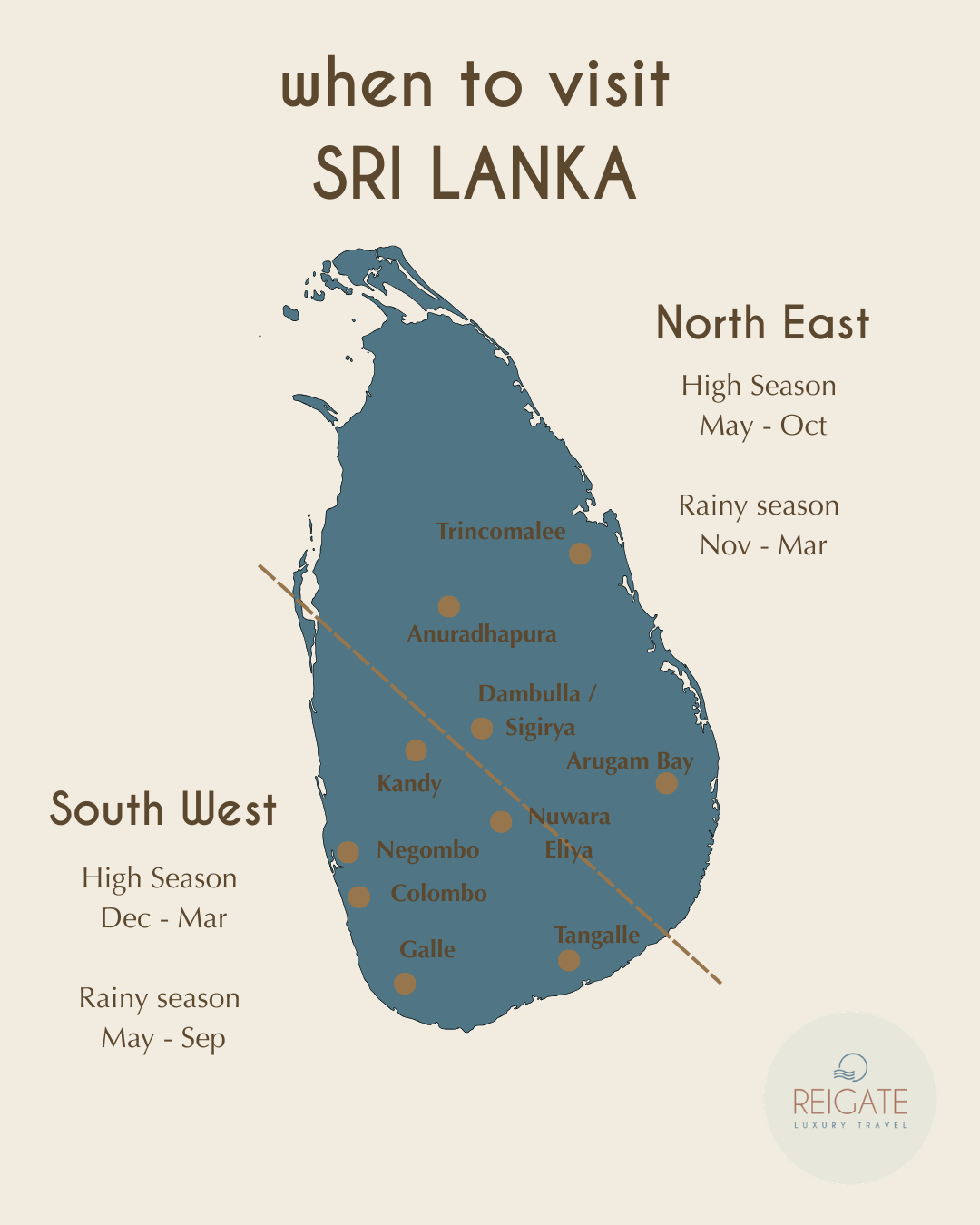
When to visit Sri Lanka
Why timing matters in Sri Lanka
Sri Lanka has not one monsoon season but two, and they hit different parts of the island at different times of year. The southwest monsoon runs from May to September and brings heavy rain to the south and west coasts. The northeast monsoon runs from October to January and does the same to the north and east.
The result is an island that you can visit year-round. The key is knowing which area to visit when.
December to March: the classic season
This is when Sri Lanka is at its most straightforward. The south and west coasts are dry, the Cultural Triangle is accessible, the hill country is lush without being waterlogged and the wildlife parks are running at full capacity.
If you want to cover a lot of ground (Colombo, Galle, Yala, Ella, Sigiriya), this is your window. December and January in particular offer the most reliable weather across the broadest range of the island.
The trade-off: this is peak season, so the best properties book up fast and prices reflect the demand. If you're planning a December or January journey, I'd be looking at this six to nine months ahead.
April: the quiet sweet spot
April sits between the two monsoon seasons and is one of the most underrated times to visit. The south and west are still largely dry, the east is beginning to open up and the crowds of peak season have thinned considerably. Prices ease slightly too.
Sinhalese and Tamil New Year falls on the 13th and 14th of April, which is a festive time to be on the island if you want to see the country in celebration rather than just in holiday mode.
May to September: the east coast comes into its own
While the southwest is getting its annual soaking, Sri Lanka's east coast (Trincomalee, Passekudah, Arugam Bay) is basking in sunshine. This stretch of coastline is quieter, less developed and rather beautiful. Trincomalee in particular has some of the best natural harbours in Asia and a warm-water bay that's hard to beat for snorkelling and diving.
Arugam Bay draws surfers from around the world during this period, but it's also simply a wonderful place to be if you want long days on the beach without the crowds you'd find further south in December.
Yala National Park typically closes in September for the dry season restocking, so if a leopard safari is high on your list, plan accordingly.
October and November: shoulder season
October and November are transitional months across much of the island. The northeast monsoon is arriving, and rainfall is more unpredictable across the south and west too. This is the quietest period for tourism.
That said, it's not without appeal. The Cultural Triangle (Sigiriya, Dambulla, Polonnaruwa) is largely unaffected by coastal weather, and the hill country around Ella and Nuwara Eliya can look extraordinary in the post-monsoon light. If you're drawn more to culture and landscapes than beaches, October and November can work well.
Prices are at their lowest, and you'll have some of the island's most celebrated properties almost to yourself.
When to go to Sri Lanka for wildlife
Leopards in Yala: December to April, when water is scarce and animals congregate around remaining sources, making sightings more likely.
Elephants in Udawalawe: Year-round, but the dry season (roughly December to April) is most reliable.
Whales off Mirissa: November to April, peaking December to March.
Wilpattu for leopards: Less visited than Yala and open year-round, a strong alternative for repeat visitors.
Our recommendation
For a first journey to Sri Lanka that covers culture, wildlife, and coast, January and February are the sweet spot. You get the full sweep of the island, the best weather across the south and west, excellent wildlife sightings and just enough fellow travellers to make it feel alive without feeling crowded.
If you've been before and want something different, May to August on the east coast is a genuinely excellent experience that most visitors never reach.
Ready to start planning? Get in touch and we'll put together an itinerary built around the best of the season.